
Schools programme
Helping children feel safe, re-engage and thrive in education.
Make a referralEarly, relational support in schools
We work with primary schools, secondary schools, alternative provision and specialist settings to support children and young people aged 8–11 and 11–16 who experience SEND, mental-health difficulties, trauma-related needs, emotional dysregulation, challenging behaviour, persistent absence or an increased risk of suspension or permanent exclusion.
Our programme combines staff awareness training with individual and group mentoring for pupils. We intervene early, strengthen the support around the child, and help prevent difficulties from escalating into repeated suspension, exclusion or disengagement.
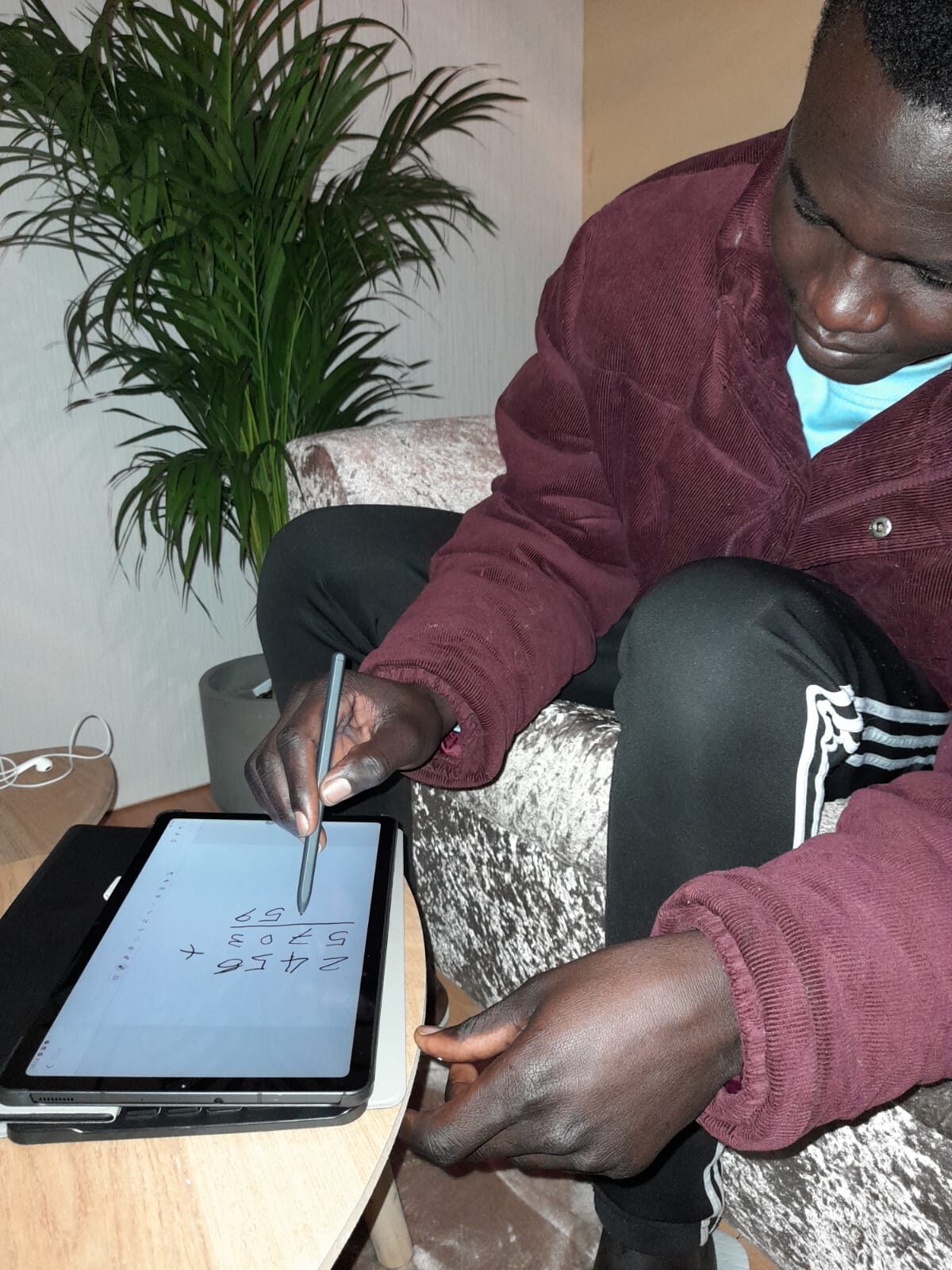
The Schools Programme
Who we support
- ✓ SEND or disabilities
- ✓ Anxiety, low mood or poor emotional wellbeing
- ✓ Trauma-related responses
- ✓ Attachment and relationship difficulties
- ✓ ADHD, autism or other neurodevelopmental differences
- ✓ Emotional dysregulation
- ✓ Bullying, isolation or low self-esteem
- ✓ Persistent or emotionally based absence
- ✓ Disrupted family relationships or instability at home
- ✓ Involvement with children’s social care
- ✓ Risk of exploitation, offending or anti-social behaviour
- ✓ Difficulty managing transitions
- ✓ Suspension or risk of permanent exclusion
Support matched to the child
Foundations Junior · ages 8–11
Creative, practical and play-informed activities to help children recognise emotions, build confidence and friendships, develop routines and prepare for the move to secondary school.
Foundations Youth · ages 11–16
Support to understand themselves, manage difficult situations and reconnect with education — from emotional regulation and restorative work to attendance, reintegration and employability.
Ways we support pupils and schools
One-to-one mentoring+
A consistent, trusted adult with whom the pupil can safely explore difficulties and work towards meaningful goals — from an introductory assessment and baseline, through weekly sessions and practical activities, to regular reviews and reintegration or transition planning.
Group mentoring+
Small, structured groups where pupils learn alongside peers — managing emotions, friendships, communication, confidence, peer pressure, conflict resolution and school belonging — using discussion, creative projects, role play, problem-solving and sport.
Learning through art & creativity+
Drawing, music, poetry, storytelling, photography and drama give pupils a safe way to communicate experiences, process emotions, strengthen identity and experience achievement.
Learning through sport & movement+
Team sports, fitness goals, cooperative games and outdoor challenges support regulation, confidence, teamwork, fair play and the ability to recover from setbacks.
Life-skills development+
Routines, organisation, travelling safely, managing money, preparing meals, staying safe online, healthy relationships and preparing for college, training or employment — built through small, achievable goals.
Improving attendance+
Relational, individualised and non-punitive support: a welcoming check-in, a named trusted adult, an agreed safe space, sensory and communication adjustments, phased timetables where appropriate and gradual increases in participation.
Behaviour support & exclusion prevention+
We look beyond the incident — identifying triggers and patterns, hearing the pupil’s account, agreeing consistent adult responses, restorative conversations, safe exit-and-return arrangements and reintegration after suspension — combining boundaries with understanding and repair.
Staff awareness & practice training+
Practical training for teachers, TAs, pastoral teams, safeguarding leads and leaders: trauma and its effect on learning, attachment-based practice, SEND and neurodiversity, co-regulation, restorative practice and psychologically informed classroom strategies.
Consultation & support planning+
Reviewing assessments and plans, gathering the pupil’s views, observing patterns, identifying unmet needs and barriers, recommending adjustments and contributing to reintegration or inclusion plans — complementing (not replacing) statutory and clinical provision.
The THRIVE approach & measuring progress
The Schools Programme follows our THRIVE Framework — Trust and safety, Hear the whole story, Relationships and systems, Individual co-produced plan, Voice into action, and Enable skills and opportunity.
Schools receive clear evidence of progress from each pupil’s starting point — attendance and participation, behavioural incidents and reintegration, emotional-regulation and coping skills, relationships, confidence and progress against individual goals — combined with the pupil’s voice and staff feedback, so the person behind the outcome remains visible.
Peer Mentoring flyer
Targeted mentoring for young people aged 14–21 — trauma-informed, strengths-based and professionally supervised.
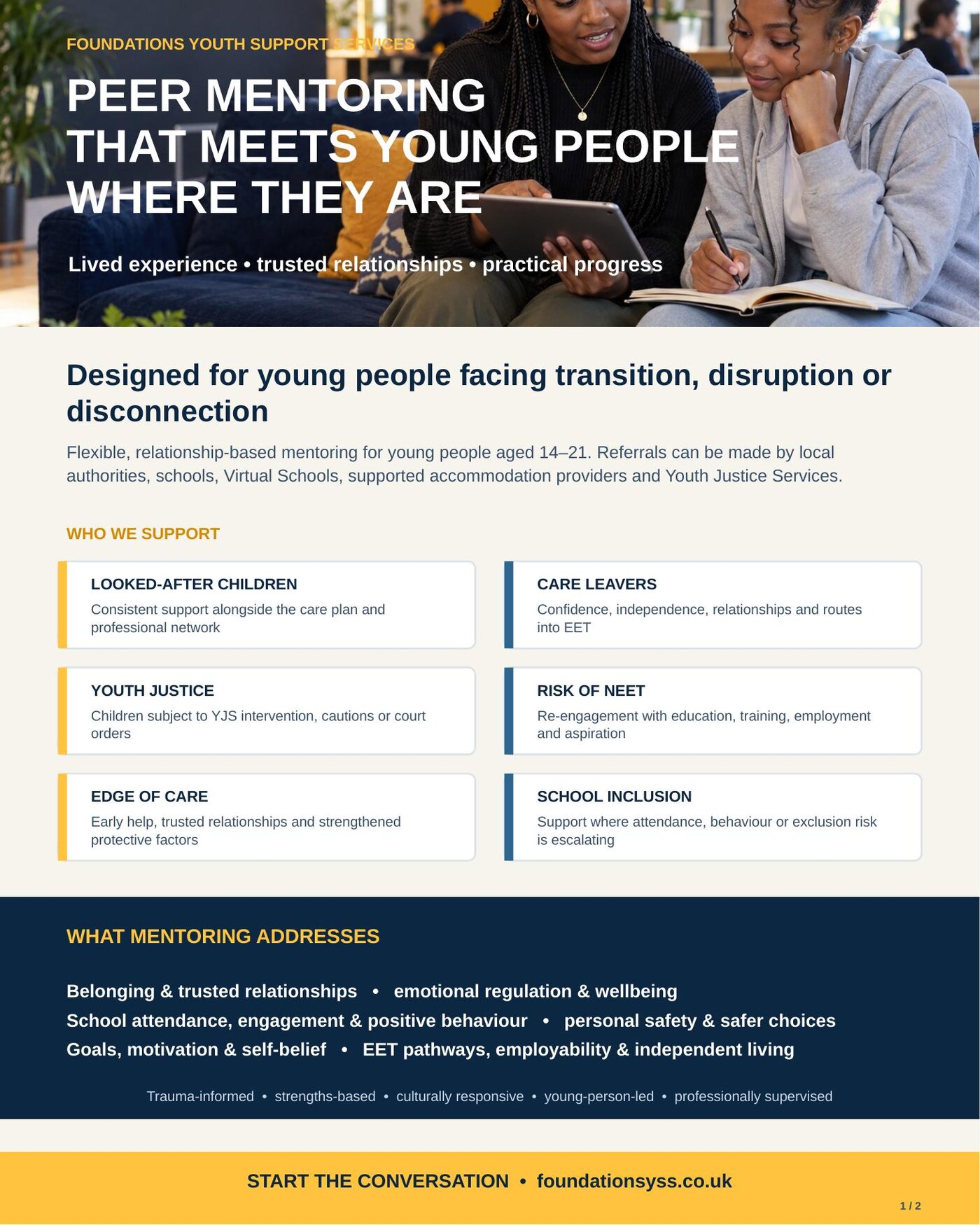
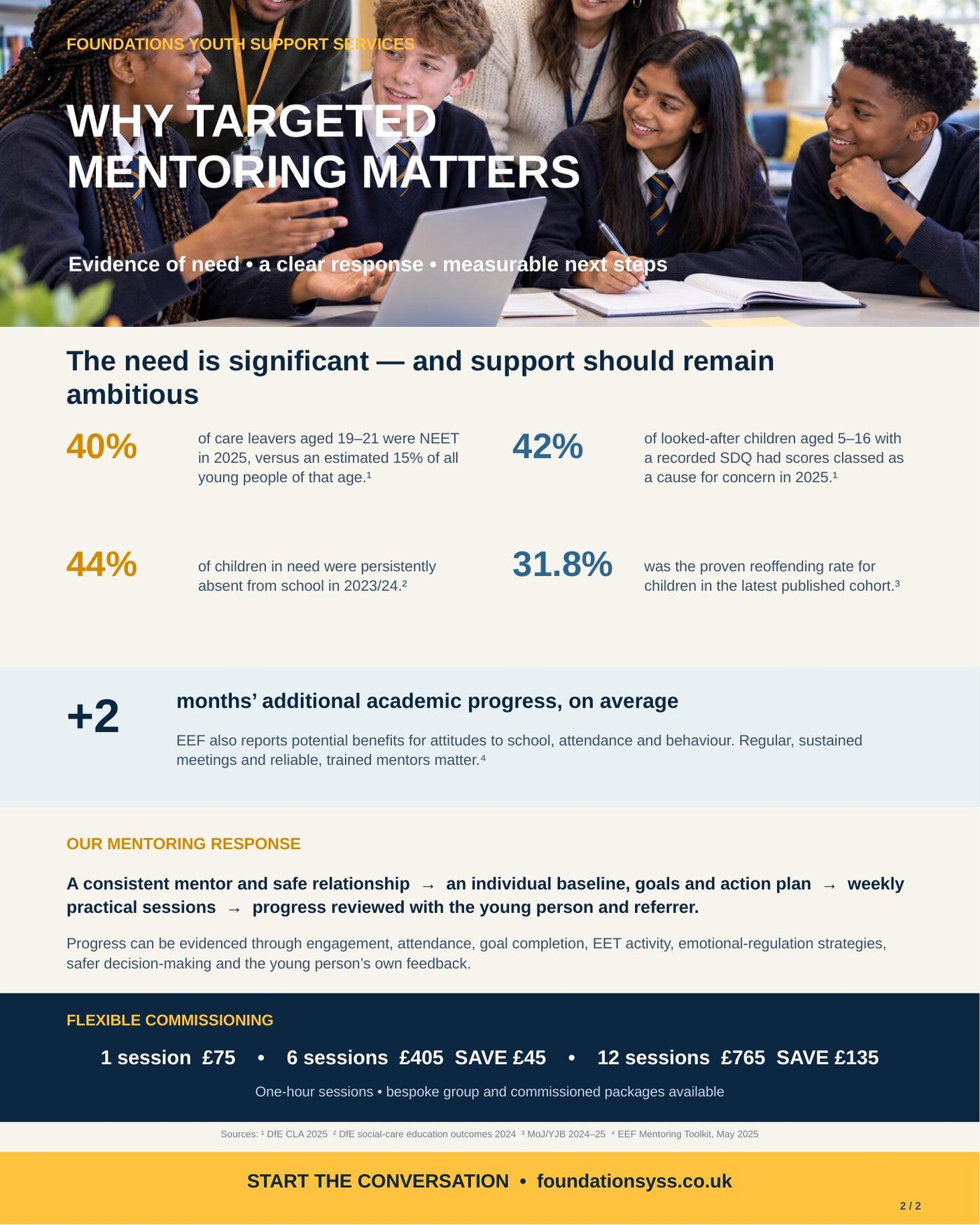
Commission the Schools Programme
One-to-one and group mentoring, staff training, attendance and exclusion-prevention support — built around your school’s priorities. Download the mentoring flyer or talk to our team.
Start a referral
Social workers and local authorities can start a referral here. We respond quickly and confidentially.